Our Short List of 3
All 3 Picks at a Glance
| Product | Specs | Action |
|---|---|---|
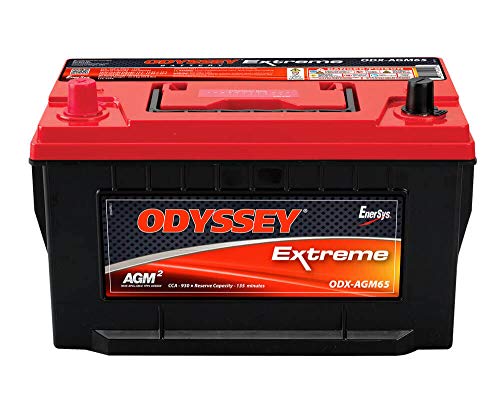 Odyssey ODX-AGM65: The Heavy-Duty Group 65 Choice | Check price on Amazon | |
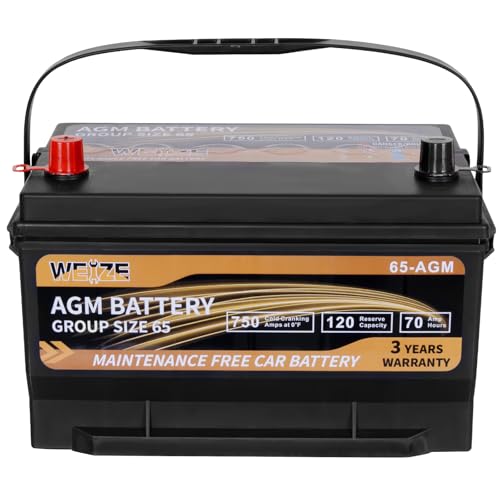 WEIZE Platinum AGM Group 65: The Documented Value Pick | Check price on Amazon | |
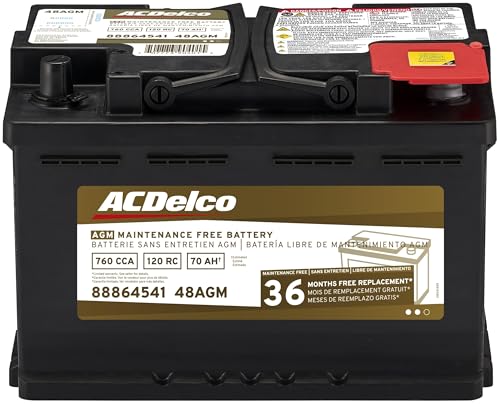 ACDelco Gold 48AGM: For the Duramax Fitment | Check price on Amazon |
Key takeaways
- Diesel pickups run two batteries and punish weak ones. Compare verified Group 65 and Group 48 AGM picks, pair replacement rules and cold-start specs here.
A diesel pickup is the hardest starting job in the light-vehicle world. A high-compression engine needs serious cranking current, glow plugs or a grid heater draw heavily before the starter even turns, and almost every diesel pickup runs two 12-volt batteries in parallel to share the work. That architecture drives every rule in this guide: the batteries must be the correct group size for the truck, they should be replaced as a matched pair, and absorbed glass-mat (AGM) construction is worth its premium here because it delivers high cranking current, resists vibration and tolerates the deep accessory loads trucks impose. This guide covers the verified AGM picks in the two group sizes that dominate the diesel fleet, and the ownership habits that make them last.
Disclosure: As an Amazon Associate, this site may earn from qualifying purchases made through links in this article, at no additional cost to you.
First: Identify Your Truck’s Group Size
Read the label on your existing batteries before shopping, because the diesel fleet splits between sizes. Ford Super Duty trucks with the Power Stroke engine use a pair of Group 65 batteries. GM’s Duramax trucks have used Group 48 (H6) pairs in many model years. Ram’s Cummins trucks appear with Group 65, Group 94R (H7) and other fitments depending on year and generation. There is no universal diesel battery, and a battery that is electrically strong but physically the wrong group will not clamp down, will not accept the cables correctly, or both. Match the group size on your label, match the terminal layout, and only then compare specifications.
The picks below cover Group 65 and Group 48, the two most common diesel fitments. If your truck takes Group 94R or another size, use the selection criteria in this guide and apply them to the equivalent battery in your size from the same makers.
Odyssey ODX-AGM65: The Heavy-Duty Group 65 Choice
This is the pick for owners who keep trucks a long time and work them hard. It asks for the largest budget of the three and justifies it in specifications and in the brand’s long record in commercial and military service.
WEIZE Platinum AGM Group 65: The Documented Value Pick
This is the sensible pick for the owner who wants genuine AGM performance and current documentation without paying the premium-brand tariff. As always with group-size families sold under one name, confirm the live listing shows Group 65 before ordering a pair.
ACDelco Gold 48AGM: For the Duramax Fitment
Note for cross-shoppers: cold cranking amps are the figure to compare, and they are not interchangeable with the plain cranking amps figure some brands headline. Compare CCA to CCA, in the same group size, and the field narrows quickly.
Why Pairs, and Why Matched
Two batteries wired in parallel behave as one battery with a shared fate. If one is old and weak, the strong one works harder, discharges into its partner and dies early; the pair then gets replaced again on the weak battery’s schedule. Replacing both at once, with the same model bought at the same time, is not upselling; it is how the system is designed to be maintained. If one battery of a pair fails a load test, replace both, and if you are tempted to economise, economise on the brand tier rather than on the count.
Clean connections matter more on diesels than on anything else in the driveway, because cranking currents are enormous and any resistance at a terminal becomes heat and voltage drop exactly when the starter needs everything. Wire-brush the clamps and posts to bright metal at every replacement, and check the cable that links the two batteries as carefully as the main cables; it is a known and overlooked failure point.
Cold Weather and Working Trucks
Diesel starting in deep cold is a system problem, not just a battery problem. Oil thickens, fuel thickens, and the pre-heat system draws hard before cranking. Batteries that test marginal in autumn announce themselves in the first hard frost. If your truck lives in a cold climate, test the pair before winter rather than during it, use the block heater when temperatures fall properly low, and remember that reserve capacity is what carries the glow-plug cycle and the long crank on the coldest morning of the year. The Odyssey pair gives the most reserve of the options here; the WEIZE and ACDelco pairs are close behind on the figures that matter.
Trucks that sit between jobs deserve a maintenance charger. An AGM-compatible smart maintainer connected during long parks prevents the slow discharge and sulfation that quietly shorten battery life in seasonal and work trucks, and it costs a fraction of one battery.
Buying Fresh and Reading the Date Code
Batteries age on the shelf as well as in the truck, so buy fresh stock. Every automotive battery carries a manufacture or shipping date code, shown as a sticker or a stamped code on the case, and a battery that has sat for many months before purchase starts its service life partly spent. When two otherwise equal options sit in front of you, take the newer date code, and when ordering a pair, ask for two units from the same production run where possible, because matched age is part of what matched pair means. A reputable seller rotates stock and will not blink at the request; it is the normal question of anyone who maintains a diesel.
Jump-Starting a Diesel, Done Properly
A diesel with two batteries confuses jump-starting habits formed on cars. Connect to one battery of the pair, positive to positive and the negative lead to a solid engine ground away from the batteries, and give the system time: a large diesel needs the donor vehicle connected for several minutes to lift the pair before cranking, and the glow-plug cycle should be allowed to complete before the attempt. Crank in reasonable bursts rather than one long grind, which overheats the starter. If a jump works, the correct next step is a charging-system and battery test, not relief, because a healthy pair does not go flat without a reason. Repeated jump-starts are hard on both the batteries and the electronics, and a truck that needs them weekly is telling you something specific; listen to it.
Testing, and Knowing When the Pair Is Done
Have the pair load-tested individually whenever starting feels slower than it used to, and always before winter in cold climates. Testing must be done with the batteries separated electrically, because the parallel connection lets a strong battery mask a failing one in a combined test, which is the classic diagnostic trap of the two-battery system. Voltage alone is not a verdict; a battery can show a fair resting voltage and collapse under cranking load, which is why the load test exists. When one battery of a pair fails, the pair is done, for the reasons covered earlier: replace both, record the date and the odometer reading somewhere in the truck’s paperwork, and the next diagnosis years later starts from facts.
Installation Notes for a Two-Battery Truck
Replacing a diesel pair is heavier work than a car battery swap, literally: each of these units is a substantial lift, and the second battery often sits in a tighter corner of the engine bay. Work one battery at a time so the system is never left with dangling live cables, keep the removed battery upright and away from painted surfaces, and photograph the cable routing before you start, because the interconnect cable’s path matters and memory is unreliable under a heavy battery. Torque the hold-downs firmly enough that the cases cannot shift off-road or over rough ground, but not so hard that a case distorts. After the swap, expect the truck’s electronics to need the usual resets, and take the first start as the test it is: a healthy pair turns a cold diesel over with an eagerness you can hear. Recycle the old pair through the retailer’s core process, both for the refund and because lead recycling is one of the genuinely closed loops in the motor industry.
The Bottom Line
Match the group size on your label first; everything else is secondary. Ford Super Duty owners shopping Group 65 should look at the Odyssey ODX-AGM65 for maximum cranking and reserve, or the WEIZE Platinum AGM Group 65 for current documentation and strong value. Duramax owners in the Group 48 fitment have the ACDelco Gold 48AGM, the best-documented battery in this guide. Buy in matched pairs, clean the connections like you mean it, and test before winter. Do that, and the coldest morning of the year becomes a non-event. That reliability, repeated season after season in all weathers, is what a diesel truck is for.