Key takeaways
- Looking for the best e bike for bikepacking? Compare long-range fat-tire e-bikes with rack mounts, big batteries and trail-ready builds for loaded trips.
Introduction
The best e bike for bikepacking is a machine built for distance, dirt and a heavy load, not a machine built for a short ride to the shops. Bikepacking means carrying camping gear, food and water over mixed surfaces for days at a time, often far from a power socket, so the right bike needs a large battery, strong rack and frame mounts, wide grippy tires and brakes that stay reliable when the bike is fully loaded.

The quick answer is to start with a fat-tire adventure e-bike with a 750W rated motor, a battery of at least 600Wh, a rear rack and frame mounts, hydraulic disc brakes and front suspension. The Aventon Aventure.2 is the strongest all-round match in this guide, with a large battery, a rear rack and a torque sensor that makes loaded climbing feel natural. The Lectric XPeak 2.0 and the Himiway Zebra are close alternatives for riders who want more range or a bigger battery, the Heybike Ranger 2.0 suits riders who value a folding frame and fat tires, and the Jasion EB5 is only a light-duty option for short overnight trips, because its small battery and lack of a rack limit what it can carry. Read the full guide before choosing, because motor class rules, battery size and rack mounts matter more for bikepacking than top speed or headline range claims.
Quick Picks
| Pick | Best for | Battery | Rack mounts | ASIN |
|---|---|---|---|---|
| Aventon Aventure.2 | Best all-round bikepacking e-bike | 720Wh | Rear rack included | Named-only, no verified ASIN |
| Lectric XPeak 2.0 | Best long-range option | 672Wh, larger option available | Rear rack mounts | Named-only, no verified ASIN |
| Himiway Zebra | Best big-battery cruiser | 960Wh | Rear rack included | Named-only, no verified ASIN |
| Heybike Ranger 2.0 | Best folding fat-tire option | 600Wh | Rear rack included | B0GKNR5V7M |
| Jasion EB5 | Light overnight trips only | 360Wh | No rack included | B09L63HGDP |
How to Choose
Battery size and real range
Battery size is the first number to check, because it decides how far you can ride between charges and how much assistance you can use on climbs. Look for the battery capacity in watt-hours, not just the headline range, because range claims are usually measured on flat ground with a light rider and low assistance. For multi-day bikepacking, a battery of at least 600Wh is a sensible minimum, and a larger battery gives you a useful reserve for headwinds, hills and a loaded bike. A 360Wh battery, such as the one on the Jasion EB5, can work for a short overnight trip with careful use of assistance, but it is not enough for long days on rough ground.
Motor power and class limits
Most bikepacking e-bikes use a rear hub motor rated at 750W, which matches the federal definition of an e-bike in the United States. The rated power and the peak power are different numbers, and listings often print the peak figure more prominently, so read the specification table rather than the headline. A motor with a peak above 750W, or a bike that can exceed 20 mph on throttle alone, may fall outside the e-bike definition in some states and may be treated as a motor vehicle on some trails and public land. A torque sensor is worth seeking out for loaded riding, because it measures how hard you are pedalling and delivers assistance in proportion, which feels smoother and more controlled on steep climbs than a simple cadence sensor.
Rack mounts, frame mounts and load carrying
Bikepacking loads are heavy, so the bike needs proper places to attach that load. A rear rack with a solid weight rating is the starting point, and frame mounts for bottle cages, a frame bag and a fork-mounted load add useful capacity. Check whether the rack is included or sold separately, and confirm the maximum load rating for the rack and for the bike as a whole, including the rider. A bike with no rack mounts forces you to rely on seat-pack and handlebar bags alone, which limits capacity and can make the bike handle poorly when fully loaded.
Tires, traction and terrain
Wide tires are one of the defining features of a bikepacking e-bike, because they spread the load over soft ground and absorb bumps that would rattle a narrow tire. Fat tires around four inches wide handle sand, snow, mud and loose gravel far better than standard tires, and they also add comfort on long days. Look for a tread pattern suited to the surfaces you will ride most, and check whether the tires are puncture-resistant, because a flat far from help is a serious problem on a loaded bike.
Brakes, suspension and gears
Hydraulic disc brakes are the right choice for a loaded bikepacking e-bike, because they stop a heavy bike reliably in wet and muddy conditions and need less hand effort than mechanical brakes on long descents. Front suspension helps on rough tracks by keeping the front wheel in contact with the ground and reducing fatigue, although it adds weight and maintenance. A wide gear range matters just as much, because you will climb steep, loose tracks with a full load, so look for a low first gear and a drivetrain with parts that are easy to replace on the road. A single-speed or narrow-range drivetrain is a poor match for loaded climbing.
Weight, fit and charging on the road
E-bikes for bikepacking are heavy, often weighing far more than a standard bicycle, and that weight affects how the bike handles, how you lift it over obstacles and how you transport it. Check the total weight, the weight limit for the rider and luggage combined, and whether the frame comes in sizes that fit you, because a poorly fitting bike is miserable over several days. Plan charging before you set off: map campsites, cafes and other places with power along your route, carry the correct charger, and remember that a larger battery takes longer to recharge. A removable battery is a real advantage here, because you can take it inside to charge while the bike stays locked outside.
The Best E Bike for Bikepacking Reviewed
Aventon Aventure.2: Best All-Round Bikepacking E-Bike
The Aventon Aventure.2 is the most complete bikepacking package in this guide. It pairs a 750W rated rear hub motor with a torque sensor, so assistance rises smoothly as you press harder on the pedals, which is exactly what you want when climbing a loose track with panniers and a tent on the back. The 720Wh battery is large enough for long days without forcing you to ration assistance, and the fat tires, front suspension and hydraulic disc brakes give it genuine off-road ability rather than a rugged appearance over commuter parts. A rear rack is included, so you can fit panniers straight away, and the frame has mounts for extra bottles and bags.
No verified Amazon ASIN was available for this model at the time of writing, so it is listed here named-only. Confirm the exact listing, frame style and colour before ordering. For riders who want one bike that covers loaded touring, rough tracks and long days in the saddle, this is the pick to start with.
Lectric XPeak 2.0: Best Long-Range Option
The Lectric XPeak 2.0 is built around range and trail ability, with a 750W rated hub motor, a torque sensor and a 672Wh battery as standard, plus a larger battery option for riders who want extra distance between charges. That larger battery option is worth considering for bikepacking, because it turns a long day into a comfortable one and leaves a reserve for detours and headwinds. The fat tires and front suspension handle gravel, sand and rutted tracks, and the rear rack mounts let you carry panniers and camping gear without improvising.
No verified Amazon ASIN was available for this model at the time of writing, so it is listed here named-only. Confirm the exact listing, battery option and frame style before ordering, because the standard and long-range batteries are different listings. If your trips regularly run beyond a single charge and you want the option of a bigger battery, this is the strongest long-range choice in this guide.
Himiway Zebra: Best Big-Battery Cruiser
The Himiway Zebra stands out for its very large 960Wh battery, which is the biggest in this guide and gives it the longest potential range between charges. That matters on multi-day trips where charging points are scarce, because it lets you use assistance freely on climbs instead of saving it for emergencies. The 750W rated rear hub motor, fat tires, front suspension and hydraulic disc brakes suit loaded riding on mixed surfaces, and a rear rack is included for panniers.
No verified Amazon ASIN was available for this model at the time of writing, so it is listed here named-only. Confirm the exact listing, frame style and colour before ordering. Check the peak motor figure on the listing against the 750W federal e-bike definition, because peak figures for this model vary between listings, and confirm the class rating for your route. For riders whose priority is maximum range on a single charge, the Zebra is the pick to compare first.
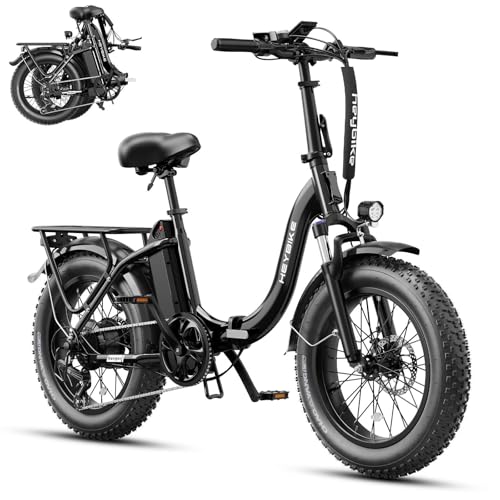
Heybike Ranger 2.0: Best Folding Fat-Tire Option
The Heybike Ranger 2.0 is a folding fat-tire e-bike with a 750W rated motor, a 600Wh battery, a rear rack and front suspension. The fat tires give it grip on sand, gravel and loose tracks, and the rear rack takes panniers for overnight gear. It is a versatile machine that works for trail riding, beach paths and loaded day trips.
Flag this pick carefully before buying. Its peak motor power is 1400W and its top speed is 28 mph, so it exceeds the 750W federal e-bike definition on peak power and exceeds the 20 mph throttle limit used in many states. That may restrict where you can legally ride it, and some trail systems may treat it as a motor vehicle rather than an e-bike. The folding hinge is also a compromise for heavy bikepacking loads, because a folding frame is less stiff than a rigid frame under a full load, so keep the load modest and check the rack and frame weight limits. The 600Wh battery is adequate for day trips and short overnights, but it is smaller than the batteries on the Aventure.2, XPeak 2.0 and Zebra, so plan charging stops accordingly. This ASIN was search-verified in an earlier article in this batch, and the Amazon product page returned an access error when checked again for this article, so no live stock confirmation is available and the listing should be re-checked before ordering.
Jasion EB5: Light Overnight Trips Only
The Jasion EB5 is a budget-minded electric bike with a 350W rated motor, a 360Wh battery, 26-inch tires, a seven-speed drivetrain and a front suspension fork. It is a light and simple machine that suits paved paths, smooth gravel and gentle hills, and its low weight makes it easy to handle and transport.
Flag this pick as a partial fit for bikepacking. The 360Wh battery is the smallest in this guide and will not cover long days or steep loaded climbing, and no rear rack is included, so carrying camping gear means adding a rack or relying on bags alone. The narrow 26-inch tires and commuter-style frame are not built for sand, mud or rough tracks, and motor power claims for this model vary between listings, so confirm the rated motor and the battery size on the exact listing before ordering. Use it only for short, easy overnight trips with a light load and a charging plan. This ASIN was verified in earlier articles in this batch, including an in-stock check in November 2026, and the Amazon product page returned an access error when checked again for this article, so no live stock confirmation is available and the listing should be re-checked before ordering.
What to Check Before You Buy
Start with the listing itself. Confirm the exact model name in the title, because brands reuse names across variants: Heybike sells a Ranger S 2.0 and a Ranger 3.0 Pro alongside the Ranger 2.0, and Jasion sells several EB5 variants with different motors and batteries. Check the ASIN in the product details against the one in this guide, and confirm the seller is the brand store. Read the specification table, not just the headline, because peak motor figures are often printed more prominently than the rated motor and the battery size in watt-hours is the number that decides range.
Then check the bikepacking essentials. Confirm that a rear rack is included or available for the model, and read its load rating. Confirm the tire size and tread, the brake type and rotor size, and whether the battery is removable. Check the frame sizes available and the maximum rider and luggage weight, and measure your storage space if you are considering a folding model. Finally, check the e-bike class rules for your state and for every trail on your route, and check the return terms and warranty, because a bike is a large purchase and assembly is usually required on delivery.
FAQ
What is the best e bike for bikepacking?
The Aventon Aventure.2 is the best all-round choice in this guide, because it combines a 750W rated motor with a torque sensor, a 720Wh battery, fat tires, hydraulic disc brakes, front suspension and an included rear rack. The Lectric XPeak 2.0 is the better choice if you want a larger battery option for longer days, and the Himiway Zebra is the better choice if maximum battery size is your priority.
How big a battery do I need for bikepacking?
A battery of at least 600Wh is a sensible minimum for multi-day bikepacking, and a larger battery gives you a reserve for hills, headwinds and a heavy load. A 360Wh battery can work for a short overnight trip with careful use of assistance, but it is not enough for long days on rough ground. Remember that headline range figures are measured in ideal conditions, so treat them as a maximum rather than a promise, and plan your route around real charging points.
Do I need a 750W motor for bikepacking?
A 750W rated motor is a good match for loaded riding, because it gives you enough power for steep climbs with camping gear while staying within the federal e-bike definition. A smaller motor can work on flat and gentle terrain, but it will struggle on steep loaded climbs. Be careful with peak power figures: a bike with a peak above 750W, or a top speed above 20 mph on throttle, may fall outside the e-bike definition in some states and may be barred from some trails, so check the rules for your route.
Are fat-tire e-bikes good for bikepacking?
Fat tires are a strong choice for bikepacking, because their width spreads the load over soft surfaces such as sand, snow, mud and loose gravel, and they add comfort on rough tracks. The trade-off is extra weight and higher rolling resistance on smooth pavement, which uses more battery. If your route mixes pavement, gravel and soft surfaces, fat tires are a good compromise. If your route is mostly smooth pavement, a narrower tire will be more efficient.
Can I charge an e-bike battery while bikepacking?
Yes, if your route passes places with power, such as campsites, cafes, shops and visitor centres. A removable battery makes this much easier, because you can take the battery inside to charge while the bike stays locked outside. A second battery is worth considering for remote routes with long gaps between charging points.
Bottom Line
Choose the best e bike for bikepacking by matching the bike to your route, your load and your charging options, not by headline range or top speed. The Aventon Aventure.2 is the strongest all-round pick, with a large battery, a torque sensor, fat tires and an included rear rack. The Lectric XPeak 2.0 suits riders who want a larger battery option, the Himiway Zebra suits riders who want the biggest battery in this guide, and the Heybike Ranger 2.0 suits riders who need a folding frame and accept its power and speed limits. The Jasion EB5 is only for short, light overnight trips.
Disclosure: As an Amazon Associate, we may earn from qualifying purchases.