Our Short List of 3
All 4 Picks at a Glance
| Product | Specs | Action |
|---|---|---|
 WD Black 4TB: the performance pick for active sessions | Check price on Amazon | |
 WD Blue 4TB WD40EZAX: the quiet CMR all-rounder | Check price on Amazon | |
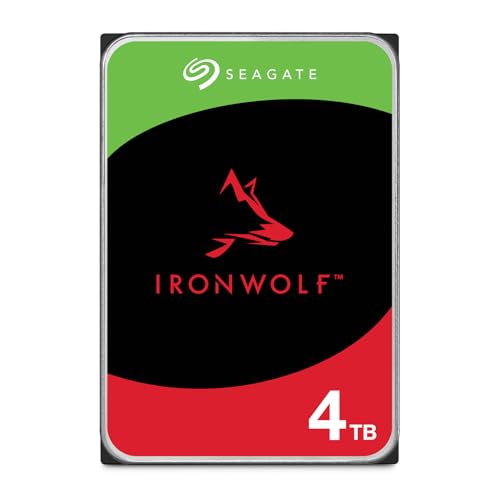 Seagate IronWolf 4TB: the archive and always-on pick | Check price on Amazon | |
 Seagate BarraCuda 4TB: bulk capacity for read-mostly duty | Check price on Amazon |
Key takeaways
- The best internal hard drives for music production, with quiet CMR picks for sample libraries, session storage and archives from WD and Seagate compared.
A music production computer eats storage in a particular pattern. The system drive wants speed for the operating system and the DAW itself. Sample libraries want capacity and steady sequential reads, because a big orchestral template streams hundreds of voices from disk in real time. Sessions and project folders want dependable writes every time you press save, and finished work wants a safe archive that does not live on the same spinning platter as your only copy of everything. Solid-state drives are the right tool for the system volume, but at multi-terabyte sizes a mechanical internal hard drive still earns its bay: nothing else stores a growing library and years of sessions at this capacity class for personal-studio money. This guide covers four 3.5-inch SATA internal drives sold on Amazon US, each suited to a different one of those jobs, with the two studio-specific concerns, noise and recording technology, treated as first-class specifications.
The two specs that matter in a studio
The first is CMR versus SMR. Conventional magnetic recording lays tracks side by side; shingled magnetic recording overlaps them to squeeze out capacity, and pays for it with slow, uneven sustained writes when the drive has to rewrite overlapped bands. For a drive that mostly serves reads, streaming samples or playing back sessions, SMR is a tolerable compromise. For a drive that records multitrack audio for hours or receives large library installs, CMR is the safer technology, and every pick below is either CMR or assigned to read-mostly work on purpose.
The second is noise. A drive that lives in a tower under the desk sits metres from your microphones and your ears. Rotational speed is the rough guide: 7,200 rpm drives perform better and sound sharper; 5,400 rpm-class drives run quieter and cooler. In a room where you record vocals or acoustic instruments, that difference is not a nicety. It is the difference between a take you keep and a take with a faint mechanical whir under it.
WD Black 4TB: the performance pick for active sessions
The trade-off is the studio one: it is the most audible drive here, so in a single-room setup, position the tower away from the microphone or lean on the quieter picks below for the recording-adjacent roles. One caution travels with this listing: the model has been discontinued at some retail channels, so confirm the exact model code and capacity on the listing before ordering. Verified as the correct WD4005FZBX, it is the strongest spinner here for work in progress.
WD Blue 4TB WD40EZAX: the quiet CMR all-rounder
That profile maps neatly onto the library-and-sessions role in a two-drive layout: samples stream from it all day, projects live on it, and its noise floor stays low enough for a tower in the same room as a condenser microphone. It is not the fastest drive here and does not pretend to be; it is the one that disappears into the background of a working studio, which is most of what most producers need.
Seagate IronWolf 4TB: the archive and always-on pick
Its firmware is tuned for multi-user, always-on patterns rather than desktop bursts, so it is not the first choice as your only working drive. As the safe pair of hands at the end of the chain, holding the second copy of everything and staying powered for years, it is exactly right, and its CMR recording means big archive writes do not fall off a cliff halfway through a library backup.
Seagate BarraCuda 4TB: bulk capacity for read-mostly duty
Assigned wrongly, as the target for all-day multitrack recording or constant large rewrites, its sustained-write behaviour will frustrate you. The buying rule is simple: BarraCuda for the library shelf, CMR drives for the workbench. Within that rule it is a roomy, quiet-running store for the parts of a studio’s data that change slowly.
Capacity planning for sample libraries
Modern sample libraries are the main reason production drives have grown. A single flagship orchestral collection can occupy several hundred gigabytes installed, and producers rarely own just one. Add piano, drum and synth libraries, a decade of session folders with their audio files, rendered stems and video content for releases, and a 4TB working volume stops looking generous and starts looking correct. The practical habit is to install libraries once, in an organised folder structure you will not need to reorganise, and to keep installers and downloaded library archives on the archive volume rather than the working drive. When a library drive eventually fills, migrate the least-used collections to the archive tier first; sessions and the core instruments you open daily should be the last things to move.
A sensible studio layout
Most home and project studios land on the same arrangement. An SSD carries the system, DAW and plug-ins. One CMR hard drive, the WD Black for performance or the WD Blue for quiet, carries active sessions and the core library. A second volume, the IronWolf in the tower or in a NAS, archives finished work and backs up the first. The BarraCuda slots in wherever read-mostly bulk storage is needed, from extra sample content to a media library. Whatever layout you choose, keep at least one copy of irreplaceable sessions on a separate physical drive; a single 4TB volume holding the only copy of five years of music is a risk no specification can justify.
Before ordering any drive here, confirm three things on the listing: the exact model code, because one letter changes the recording technology; the 3.5-inch form factor and SATA interface your bay expects; and that the listing is for a new retail drive rather than a pulled or refurbished unit, which matters for warranty and for trust in the mechanism.
Setup habits that protect your sessions
A few working habits matter as much as the drive you choose. Format a new internal drive with the file system your operating system prefers and leave the manufacturer’s utilities out of the equation unless you need them. Keep sessions on a different physical drive from the system volume, so a system failure or reinstall never touches project data, and so the drive recording audio is not competing with the operating system’s background writes.
Watch drive health rather than waiting for symptoms. Every drive here reports SMART data; a monthly glance at reallocated and pending sector counts gives warning long before a failure, and a drive that starts clicking, parking repeatedly or vanishing from the system should be cloned the same day, not the same month. Vibration is the slow enemy in a tower: mount drives firmly, keep cables from pressing on the chassis, and avoid stacking loose external drives on top of a case that contains spinning disks.
One warning about RAID belongs in any honest storage guide. A mirrored array protects against a drive dying; it does not protect against deletion, corruption, theft or a controller writing garbage to both disks at once. Producers who rely on a mirror as their only backup eventually learn the distinction the expensive way. The layout described above, working drive plus a physically separate archive, is simpler and safer for a studio of any size.
Finally, think in capacities rather than drives. Sample libraries only grow, and a 4TB volume that feels endless this year becomes the constraint two library purchases later. Buying the 4TB class now, as all four picks here do, leaves room to grow into the space instead of migrating sessions under deadline pressure, which is when mistakes and lost files happen.
Internal drive or external? The studio answer
Producers sometimes ask whether an external USB drive can take these roles instead. For archives and backups, yes: an external drive that is only connected while copying is arguably safer than an always-on internal one. For active sessions and sample streaming, internal SATA remains the better tool: it is always present when the DAW opens a project, it avoids USB power and cable variables during recording, and it keeps the working set inside the machine where the session expects to find it. The four drives here are internal units for that reason, with the IronWolf equally at home in a small NAS enclosure if your archive outgrows the tower. Match the connection to the job: internal for work in progress, whatever you trust for the copies that protect it.
Verdict
For active production work, the WD Black 4TB is the performance pick and the WD Blue 4TB EZAX is the quiet CMR all-rounder most studios should start with. For archives and always-on backup duty, the IronWolf 4TB is purpose-built. For inexpensive bulk storage that mostly gets read, the BarraCuda 4TB does the job, with its SMR nature understood and planned around. Match the drive to the job, and a mechanical disk remains one of the most cost-effective upgrades a growing studio can make.
Disclosure: As an Amazon Associate, this site may earn from qualifying purchases made through links in this article, at no additional cost to you.