Our Short List of 3

All 3 Picks at a Glance
| Product | Specs | Action |
|---|---|---|
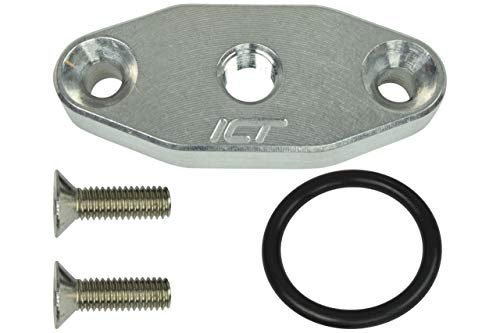
| 1. ICT Billet 551608 LS Oil Port Adapter — The Default Single-Turbo Feed Plate | Check price on Amazon | |
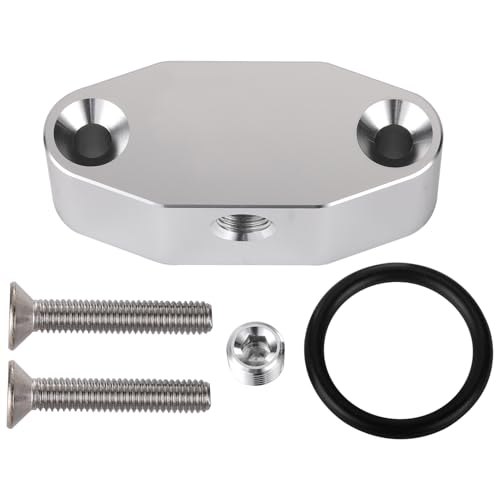
| 2. Podavelle LS 90 Degree Turbo Oil Feed Line Adapter — The Right-Angle Alternative | Check price on Amazon | |
| 4. TIKSCIENCE LS Oil Port Adapter, 90 Degree 1/8 NPT — The Budget Plate | Check price on Amazon |
Key takeaways
- LS turbo oil feed adapters and plates that tap pressurised oil correctly: ICT Billet 551608, Podavelle 90-degree plate, ICT twin-turbo dual plate and a 90-degree port adapter, with feed-versus-drain explained.
As an Amazon Associate we earn from qualifying purchases.
Disclosure: This article contains affiliate links. If you buy through a link on this page, we may earn a commission at no extra cost to you.
A turbocharger on an LS engine lives or dies on its oil supply. The turbo’s bearings need a steady stream of pressurised, filtered engine oil from the moment the shaft starts to spin, and the LS platform does not provide a dedicated turbo feed port from the factory. Every LS turbo build therefore has to create that supply point deliberately, and the quality of the small adapter plate or fitting that creates it decides whether the feed is clean and reliable or a slow leak waiting for boost to expose it.
This guide covers only the feed side of that job: adapter plates and fittings that take pressurised oil out of the LS oiling system — most commonly from the port in the oil pan rail just above the oil filter, or from the oil pressure sender location — and present a threaded port, usually 1/8 NPT, that a -4 AN feed line can connect to. It does not cover oil return or drain parts. The drain is a different, larger, gravity-fed circuit, typically -10 AN, that returns oil from the turbo to the pan or timing cover, and a drain fitting cannot do the feed’s job or the other way round. Parts sold purely as returns were excluded here even when their listings mention turbos in the title.
How an LS Turbo Oil Feed Actually Works
On a wet-sump LS, the most popular feed source is the machined boss on the oil pan, directly above the oil filter. In factory applications that port is blanked off or used for an oil cooler circuit on some models. An adapter plate bolts over it, seals with an O-ring or gasket, and adds a 1/8 NPT port fed by pressurised oil that has already passed through the filter — exactly what a turbo bearing wants. The alternative source is the oil pressure sender port at the back of the block or valley area, using a metric-to-NPT or metric-to-AN adapter, which suits builds where the pan port is inaccessible or already used by a cooler or a gauge sender.
From that port, the feed itself is normally a -4 AN line, often PTFE-lined and stainless braided, because the turbo needs volume at pressure but not a flood. Journal-bearing turbos generally run an unrestricted -4 feed, while many ball-bearing turbos need a restrictor in the feed to avoid pushing oil past the seals. That restrictor decision belongs to the turbo manufacturer’s instructions for your exact cartridge, not to habit. What every build shares is the need for the take-off point itself to be rigid, sealed and correctly threaded, which is why the adapter plate is the part worth choosing carefully.
Two fitment warnings apply to almost every plate in this guide. First, pan architecture matters: the common plates fit most LS oil pans but exclude the GTO front-sump pan, whose internal oil routing differs, and dry-sump pans such as the LS7 and LS9, which do not use this port the same way. Second, thread sealant discipline matters: 1/8 NPT is a tapered thread that seals on the threads, so use a suitable sealant sparingly and keep it off the first thread, because excess sealant that breaks loose travels straight toward the turbo bearing you are trying to protect.
Quick Comparison
| Pick | Type | Port layout | Best for |
|---|---|---|---|
| ICT Billet 551608 Oil Port Adapter | Single-port feed plate | One 1/8 NPT port | Single-turbo builds feeding from the pan port |
| Podavelle 90 Degree Oil Feed Plate | Single-port feed plate, anodised silver | One 1/8 NPT port, up or down orientation | Tight engine bays needing a right-angle exit |
| ICT Billet 551533 Twin Turbo Dual Plate | Dual-port feed plate | Two 1/8 NPT ports at 90 degrees | Twin-turbo builds, or feed plus a pressure sender |
| TIKSCIENCE 90 Degree Oil Port Adapter | Single-port feed plate | One 1/8 NPT port | Budget single-feed or gauge take-off on LS pans |
1. ICT Billet 551608 LS Oil Port Adapter — The Default Single-Turbo Feed Plate
The ICT Billet 551608 is the part most LS turbo builders reach for first, and its Amazon listing describes it plainly: an LS oil port adapter with a 1/8 NPT turbo oil feed plate, sold as a turbocharger supply plate for a long list of LS engines including LS1, LS2, LS3, LS6, LQ4, LQ9, LR4 and many of the later Gen IV variants. It bolts over the port above the oil filter, seals the opening, and leaves you with a single threaded port pointing at the route your feed line wants to take.
That single-port simplicity is the point. A single-turbo street build needs one feed take-off, and every extra port is an extra plug, an extra seal and an extra potential weep. ICT machines the plate from billet aluminium in the United States, and the design has been on the market long enough that its fitment behaviour is well documented by builders: it suits the standard rear-sump and most other wet-sump LS pans, with the usual exclusions for the GTO front-sump pan and the dry-sump LS7 and LS9 applications.
Installation is a pan-rail job, not an engine-out job. The plate replaces the factory cover at the port, so access from underneath with the filter removed is normally enough. Two practical notes from the design itself: confirm the O-ring or gasket surface on your pan is clean and flat before torquing the plate, because the seal is only as good as that face, and plan the 1/8 NPT to -4 AN adapter fitting at the same time, since the plate gives you the threaded port and the AN fitting that the hose end needs is a separate, inexpensive piece. For a single turbo fed from the pan, this is the cleanest starting point in the guide.
2. Podavelle LS 90 Degree Turbo Oil Feed Line Adapter — The Right-Angle Alternative
The Podavelle plate solves the same problem with a different exit geometry. Its listing describes a plate that seals off the oil port in the pan above the oil filter while offering a 1/8 NPT port that can point straight up or straight down, for sensors or a turbo oil feed line, and it states the same broad LS pan compatibility as the ICT plate, with the same exclusions: no GTO front-sump pans, no dry-sump LS7 or LS9 pans, and no LS4 pans. The plate is specified as 6061-T6 aluminium with an anodised silver finish, under manufacturer part number PV037-1-1/8SL.
The up-or-down port orientation is more useful than it sounds. In a swap chassis, the straight-ahead exit of a conventional plate can point the feed fitting directly at a crossmember, a steering component or the filter itself, forcing an awkward hose loop. A port that exits vertically lets the -4 line leave the plate in the plane of the pan rail and turn once, with a proper bend radius, toward the turbo. Podavelle also notes the port can serve an oil pressure or temperature gauge sender instead, which makes the plate a reasonable choice for a naturally aspirated build that simply wants a clean gauge take-off and may add a turbo later.
The trade-off is brand depth. Podavelle does not have ICT’s long documentation trail in the LS community, so check the plate’s sealing face and thread quality on arrival and test-fit the NPT fitting by hand before the plate goes on the engine. Judged on its stated specification — correct material, correct port, correct stated fitment and exclusions — it is a legitimate feed plate, and its geometry earns it a place here.
3. ICT Billet 551533 Twin Turbo Dual 90 Degree Oil Feed Adapter Plate — Two Ports for Twin Turbos
ASIN: N/A — no reliable Amazon US ASIN for this exact model could be confirmed from an indexed Amazon US listing during research, so no code is printed rather than risk a wrong one. The model, its part number 551533 and its specification are confirmed from retailer and roundup listings described below.
Twin-turbo LS builds change the plumbing arithmetic. Two turbos need two feeds, and teeing a single -4 line is an ugly way to get them, with unequal hose lengths and a fitting stack at the worst possible place. ICT’s 551533 plate answers with two 1/8 NPT ports on one plate at the same pan location, arranged at 90 degrees, so each turbo gets its own short, direct feed take-off. Retailer descriptions of the plate describe it sealing the oil port above the pan and adding the two ports for sensors or turbo oil lines, keeping the routing tidy, and note billet aluminium construction.
The second port is useful even on a single-turbo engine. It gives a mechanical oil pressure gauge or a replacement sender a home that is not stacked on adapters at the back of the block, which is a common source of leaks and broken senders on swaps. If you run one turbo and one sender, this plate is arguably tidier than the single-port version plus a tee.
The same pan exclusions apply as with the rest of the ICT plates — verify your pan is not a GTO front-sump or a dry-sump unit before ordering. Also plan port plugs for any unused port and remember that two NPT ports mean two chances to over-tighten a tapered fitting into an aluminium plate; snug with sealant is the goal, not maximum torque. For twin-turbo builds, this is the most purpose-built feed plate in this guide.
4. TIKSCIENCE LS Oil Port Adapter, 90 Degree 1/8 NPT — The Budget Plate
The TIKSCIENCE adapter covers the same pan port with a 90-degree 1/8 NPT outlet, sold as an LS twin turbo oil feed line adapter and oil port supply plate. Its Amazon listing data gives a modest item weight of just a few ounces and compact package dimensions, consistent with a small machined plate rather than a kit, and lists manufacturer part number GYGG02. Functionally it does the same job as the plates above: seal the port above the filter and present one threaded take-off for a feed line or a sender.
A budget plate like this is a rational buy when the build is simple and the buyer is willing to inspect what arrives. Check that the sealing face is flat, that the NPT thread is cleanly cut, and that the supplied hardware, if any, matches the pan’s bolt pattern before the engine is filled with oil. Those two minutes of inspection are the entire difference between a bargain and a comeback job, because the plate’s working life is spent holding back full oil pressure above a hot exhaust-side environment.
Where it gives ground to the ICT and Podavelle plates is documentation: the listing is thinner on stated pan exclusions and material detail, so the buyer should apply the same exclusions conservatively — assume front-sump GTO and dry-sump pans are out unless the seller confirms otherwise in writing. As a single feed or gauge take-off on a common wet-sump LS pan, though, it is the right type of part at the simple end of the range.
Feed Is Not Drain: The Distinction That Protects Your Turbo
Because listings blur the two, it is worth stating plainly. The feed is a small, pressurised supply: -4 AN is typical, oil arrives under pump pressure, and the parts in this guide create its source. The drain is a large, unpressurised return: -10 AN is typical, oil leaves the turbo by gravity, and it needs a straight, downhill run into the pan or a timing-cover return, with no low spots where oil can pool. A drain flange, a no-weld pan drain bung or a timing-cover return plate is not a feed part, and none appears in this guide as a pick, however often such parts are bundled in universal turbo oil line kits.
Getting this backwards, or buying a combined universal kit whose feed side is an afterthought, produces the classic symptoms: oil pushed past turbo seals, smoking on decel, and a builder blaming the turbo for a plumbing error. Choose the feed take-off deliberately, choose the drain separately and just as deliberately, and keep the two decisions in their own categories.
Buying Checklist for an LS Turbo Oil Feed
Confirm your pan type first: standard wet-sump LS pans suit the plates here; GTO front-sump and dry-sump LS7 or LS9 pans generally do not. Decide your source — the pan port above the filter is the default; the sender port is the fallback when the pan port is taken. Count your ports honestly: one turbo needs one feed, twins need two, and a gauge sender needs one of its own. Match the plate’s 1/8 NPT port to a quality NPT-to–4 AN fitting and a PTFE-lined braided feed line of the length your routing actually measures, not a guessed length. Check your turbo maker’s guidance on feed restrictors before the first start, especially with a ball-bearing cartridge. And before the engine turns over, prime the system and inspect the plate, fitting and line at idle: a feed leak found in the driveway is a nuisance, while the same leak found at boost is an engine.
Do that, and the smallest parts in the turbo system stop being its weakest link. The four plates above all create the same pressurised take-off in slightly different geometries and at different levels of documentation — pick the one whose port layout matches your build, and the feed side of an LS turbo conversion becomes the solved problem it should be.