Key takeaways
- Compare drone battery multi-packs by pack count, capacity, compatibility and charging setup, and learn how to judge fair value for DJI Mini, FPV and small quadcopter batteries.
Affiliate Disclosure: As an Amazon Associate, we earn from qualifying purchases made through links in this article, at no additional cost to you. Product details below come from manufacturer and retailer listings, not from detailed research, and availability should be checked on the product page before ordering.
What “Pricing” Really Means for a Drone Battery Multi-Pack
The word pricing in this keyword is a search term, not a promise of a specific figure. This guide does not quote amounts, because listed amounts change frequently and vary by seller, colour and bundle. Instead, it explains how to judge whether a drone battery multi-pack is fairly priced for what it contains, so you can compare two packs on equal terms and avoid paying a premium for a bundle that does not actually fit your drone.
A multi-pack is only good value when every battery in it fits your aircraft, works with your charger, and delivers the flight time its listing claims under realistic conditions. A two-pack of the wrong batteries is worse value than a single correct battery, no matter how attractive the bundle looks. The first step is therefore compatibility, not cost. Check the exact drone model, the battery model number, the voltage, the connector and the physical shape before comparing anything else.
The second step is to work out what you are actually getting per battery. A three-pack and a two-pack cannot be compared by their headline figures alone. Divide the bundle into its parts: how many batteries are included, what capacity each one holds, whether a charging hub or cable is included, and whether the batteries are genuine manufacturer packs or third-party replacements. A bundle that includes a multi-battery charging hub can be better value than a bundle with one more battery but no hub, because charging three batteries one at a time on a single-battery charger takes far longer and leaves you grounded between flights.
The third step is to read the flight-time claim the way it was measured. Manufacturers usually quote a maximum flight time measured in controlled conditions, often hovering or flying forward at a steady speed in still air, with no wind and no payload. Real flights in wind, at altitude, in cold weather or with a camera running will be shorter. Treat the quoted figure as a ceiling for comparison between packs, not as a guarantee for your next outing.
How to Compare Multi-Packs Fairly
A fair comparison starts with four numbers that appear on almost every drone battery listing: capacity in milliamp-hours, voltage, energy in watt-hours, and the number of batteries in the pack. Capacity tells you how much charge each battery holds. Voltage tells you the electrical system it belongs to, and it must match your drone. Energy in watt-hours combines the two and is the figure airlines use for carry-on limits, so it matters for travel as well as for flight time.
Next, look at the battery type. Most modern camera drones use intelligent lithium-ion or lithium-polymer packs with a built-in management board that reports charge level and health to the aircraft. FPV racing drones use high-discharge lithium-polymer packs with a stated C rating, which describes how quickly the pack can deliver current. A high C rating matters for FPV freestyle and racing, where the motors draw hard in bursts. It matters far less for a camera drone that cruises gently, where capacity and weight matter more.
Charging setup is the part buyers most often overlook. Some multi-packs include a bi-directional charging hub that charges batteries in sequence and can also act as a power bank for a phone. Others include only the batteries, leaving you to buy a hub separately or charge through the aircraft one battery at a time. When you compare bundles, count the hub as part of the value. A hub that charges two or three batteries while you drive to a location is worth more in practice than a small difference in headline capacity.
The Three Multi-Packs in This Guide
The three packs below cover three different kinds of drone flying, and they are not interchangeable. One is a two-pack of intelligent batteries for DJI Mini 4K, Mini 2, Mini 2 SE and Mini SE aircraft. One is a five-pack of small lithium-polymer cells for entry-level quadcopters. One is a two-pack of high-discharge FPV packs for racing and freestyle quads. Pick the section that matches your aircraft, and ignore the others, because a battery that does not fit your drone has no value at any bundle size.
| Multi-pack | Batteries included | Capacity per battery | Fits |
|---|---|---|---|
| YATEOO 2-Pack with charger hub | 2 | 2400mAh | DJI Mini 4K, Mini 2, Mini 2 SE, Mini SE |
| Holy Stone 5-pack | 5 | 650mAh | Syma X5 and X5C, Holy Stone M68R |
| OVONIC 4S 2-pack | 2 | 1550mAh | FPV quads using an XT60 connector |
1. YATEOO Intelligent Battery 2-Pack with Bi-Directional Fast Charger for DJI Mini 4K, Mini 2, Mini 2 SE and Mini SE

Best for: DJI Mini 4K, Mini 2, Mini 2 SE or Mini SE owners who want two spare batteries and a hub in one purchase.
This is the most complete bundle of the three, because it pairs two batteries with a bi-directional charging hub rather than selling the batteries alone. The listing states a capacity of 2400mAh per battery at 7.7 volts, with a maximum flight time of up to 31 minutes per charge under the conditions the listing describes. The model number is BT-MN2, and the listing states a one-year manufacturer warranty.
The hub is the practical heart of the bundle. A two-pack without a hub means charging one battery, swapping it out, and charging the next, which stretches a flying session across a long afternoon of waiting. A hub that accepts both batteries and charges them in sequence lets you arrive at a location with both packs topped up from a single cable. The listing describes the hub as bi-directional, which in this category usually means it can also discharge a battery to charge another device, although you should confirm the exact behaviour on the product page for the variant you order.
Compatibility is narrow and specific, which is a strength rather than a limitation. The pack is listed for the DJI Mini 4K, Mini 2, Mini 2 SE and Mini SE. It is not listed for the Mini 3 series, the Mini 4 Pro or the Mavic Mini, and using a battery designed for a different aircraft can cause fit problems or error messages in the flight app. Check your aircraft model on the label under the battery bay before ordering, and match the model number BT-MN2 rather than relying on a photo.
On value, this bundle should be judged as a kit, not as two batteries. Compare it against the cost of two individual batteries plus a separate charging hub, and against a single genuine manufacturer battery on its own. Third-party intelligent batteries typically cost less per battery than the aircraft maker’s own pack, and the trade-off is that the aircraft may report the battery differently and the pack may not carry the same battery-health reporting as the original. For casual and travel flying, most pilots find that trade acceptable. For commercial work where every flight is logged, the genuine pack is the safer choice.
One caution applies to every third-party intelligent battery: charge both packs fully before first use, as the listing advises, and fly a short test flight close to home before taking the pair on a trip. If the aircraft reports an error or the flight time is far below the stated figure on a calm day, return the bundle under the stated warranty rather than flying through the problem.
- ASIN: B0FX4TNNDD (Candidate — Amazon US indexed listing; live product page could not be read, so stock and offer status still need a live check before publishing or ordering.)
2. Holy Stone Upgraded 5-Pack, 3.7V 650mAh 25C LiPo Battery for Syma X5, X5C and Holy Stone M68R
Best for: Beginners flying small quadcopters who want the lowest cost per flight and do not mind swapping small batteries often.
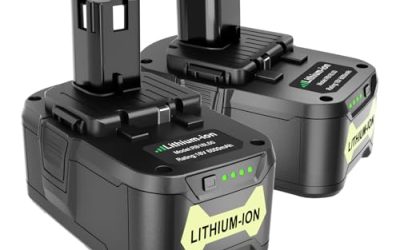
This is the only five-pack in the guide, and it suits a completely different kind of flying. Each battery is a 3.7-volt, 650mAh lithium-polymer cell with a 25C discharge rating, sold as a set of five for Syma X5 and X5C quadcopters and the Holy Stone M68R. These are small toy-grade and hobby-grade quadcopters, not camera drones, and their batteries are correspondingly small, light and simple.
The value case here is straightforward: five batteries means five short flights from one outing instead of one, and the cost per battery in a five-pack is usually well below the cost of buying the same cells one at a time. For a beginner learning to fly, that matters, because the first weeks of flying involve many short sessions, many landings and many recharges. A single battery turns every outing into a brief hop followed by a long wait. Five batteries turn it into a real practice session.
The trade-offs are equally straightforward. A 650mAh cell gives a short flight, and the listing’s suggestion of extra flight time across the set adds separate flights together rather than extending a single flight. You will still land, swap the battery and take off again. The cells also need care: small lithium-polymer packs should be charged on the charger supplied or recommended for them, never left charging unattended, and stored at partial charge if they will sit unused for weeks. A puffed or damaged cell should be retired and recycled, not flown again.
Compatibility is the whole decision. These cells fit the Syma X5, X5C and Holy Stone M68R and similar small quadcopters that use the same plug and battery bay. They do not fit DJI aircraft, FPV racing quads or any drone that takes an intelligent battery. Measure the battery bay and check the connector in the listing photos against your own battery before ordering, because small quadcopter batteries look similar across brands while their plugs differ.
For judging value, count the flights rather than the milliamp-hours. Five cells at 650mAh each hold less total energy than a single large camera-drone battery, but they deliver five separate flying sessions for a small quadcopter, which is exactly what a beginner needs. If you fly a larger drone, this pack is irrelevant to you, however low its cost per battery appears.
- ASIN: B00SV1F8VQ (Candidate — Amazon US indexed listing; live product page could not be read, so stock and offer status still need a live check before publishing or ordering.)
3. OVONIC 4S LiPo Battery 100C 1550mAh 14.8V with XT60 Connector, 2-Pack
Best for: FPV racing and freestyle pilots flying five-inch quads that use an XT60 power connector.
This two-pack belongs to a different world from the camera-drone packs above. Each battery is a four-cell, 14.8-volt lithium-polymer pack rated at 1550mAh with a 100C continuous discharge rating, an XT60 discharge plug and a JST-XHR balance plug, with 12AWG leads. It is built for five-inch FPV racing drones, freestyle quads and cinewhoops that draw heavy current in bursts, and the 100C rating is the figure that makes it suitable for that use.
For FPV pilots, buying in pairs is standard practice, because a flying session means cycling through several packs, with one flying while others charge. A two-pack is the smallest sensible unit, and most pilots own four or more packs for a day at the field. The value question is therefore not whether to buy a pair, but which pair to buy: the capacity, the C rating, the weight and the connector must all match the quad. A 1550mAh four-cell pack is a common middle ground for five-inch builds, giving a useful balance of flight time and agility without the weight of a larger pack.
The XT60 connector is the key compatibility check. If your quad uses an XT60 power lead, this pack plugs straight in. If it uses an XT30 or a different connector, it does not, and adapting a high-current connector with an adapter is poor practice on a racing quad. Check the balance plug as well: the JST-XHR balance lead must fit your charger, and your charger must have a four-cell lithium-polymer mode with balance charging.
Weight and size deserve a look before ordering. The listing and retailer pages describe this pack at around 184 grams, with dimensions of about 72 by 35 by 37 millimetres. That is a standard size for a five-inch build, but tight frames and small cinewhoops may need a smaller pack, so measure your battery pad and strap before buying.
Safety matters more here than in the other two sections, because high-discharge lithium-polymer packs store a lot of energy and are handled roughly in FPV flying. Always balance-charge these packs, never charge a crashed or puffed pack, store them in a fire-resistant bag at storage voltage when they will sit unused, and retire any pack that has a damaged lead or a cell that reads far from its siblings. A two-pack is no bargain if one pack is damaged in a crash and the other is charged without checking.
- ASIN: B08998Z859 (Candidate — Amazon US indexed listing; live product page could not be read, so stock and offer status still need a live check before publishing or ordering.)
Multi-Pack or Single Batteries: Which Is Better Value?
The honest answer depends on how you fly. If you fly most weekends and each outing uses two or three batteries, a multi-pack is almost always better value, because the cost per battery falls and the bundle often includes a hub or charger that you would buy separately anyway. If you fly once a month for a few minutes, a single spare battery may serve you better, because lithium batteries age even when they are not used, and a shelf full of ageing packs is not value at all.
Charging, Storage and Safety
Drone batteries are lithium-based, and the same habits that keep them safe also keep them performing well. Charge intelligent batteries on the hub or charger made for them, and charge lithium-polymer FPV packs on a balance charger set to the correct cell count. Never charge a battery that is swollen, punctured, wet or unusually warm. Charge on a non-flammable surface, in a room where someone is present, and do not leave charging batteries unattended overnight.
Storage matters as much as charging. Intelligent batteries from camera-drone makers often discharge themselves slowly to a storage level if left unused, which is a designed behaviour, not a fault. Removable FPV packs do not do this on their own, so use your charger’s storage mode before putting them away for more than a few days. Store all drone batteries in a cool, dry place away from direct sun, in a fire-resistant bag for lithium-polymer packs, and never loose in a bag where metal objects can bridge the terminals.
For air travel, check the watt-hour figure on each battery and your airline’s rules before you pack. Spare lithium batteries must travel in carry-on baggage, not in checked luggage, and many airlines limit the number and size of spares. Keep batteries in individual protective cases or with their terminals covered, and carry the manual or the listing details in case security asks about the packs.
Frequently Asked Questions
Is a drone battery multi-pack always cheaper per battery than buying singles?
Usually, but not always. A multi-pack generally lowers the cost per battery, and a bundle with a charging hub adds further value. However, a single genuine manufacturer battery can be better value than a multi-pack of third-party packs if the third-party packs do not fit well or deliver far less flight time. Compare the cost per battery against the flight time each battery delivers, not against the headline bundle figure alone.
Do third-party drone batteries work as well as the maker’s own batteries?
Third-party intelligent batteries from established accessory brands usually work well for casual flying and often match the stated capacity closely, but they may not report battery health to the flight app in the same way as the maker’s own pack. For commercial work or for flights where logging matters, the maker’s own battery is the safer choice. Always confirm compatibility with your exact aircraft model.
What does the C rating mean on an FPV battery?
The C rating describes how quickly a lithium-polymer pack can deliver its stored charge. A 100C rating on a 1550mAh pack means it is rated to deliver a high continuous current for the short bursts that FPV flying demands. A higher C rating suits aggressive flying, while a lower C rating suits gentle cruising. The rating should be matched to the motors and the flying style, not chosen on its own.