Our Short List of 3

All 5 Picks at a Glance
| Product | Specs | Action |
|---|---|---|
| Samsung 45W Wall Charger Power Adapter with Cable Included (EP-T4511XBEGUS) | Check price on Amazon | |
 Belkin BoostCharge 3-Port USB-C Wall Charger 67W | Check price on Amazon | |
 Belkin USB-C Charger Block 25W (WCA012) | Check price on Amazon | |
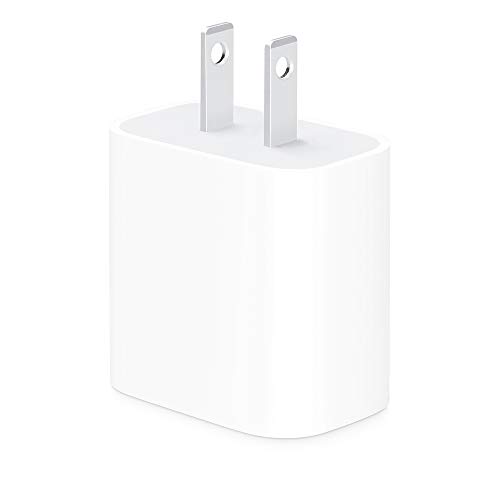 Apple 20W USB-C Power Adapter (MHJA3AM/A) | Check price on Amazon | |
 INIU USB-C Charger 30W Dual Port | Check price on Amazon |
Key takeaways
- Compare the best quick phone chargers for iPhone, Galaxy and Pixel, with wattage, ports, PPS and cable guidance to help you pick the right fast charger.
A slow charger turns a short break into a long wait, and that problem gets worse as phone batteries grow and charging windows shrink. The best quick phone chargers solve it with USB-C Power Delivery, higher wattage where the phone can use it, and, on many Android models, PPS support that fine-tunes voltage and current during the charge. Picking the right one is mostly about matching the charger to the phone, because an iPhone, a Galaxy flagship, and a Pixel do not all draw power in exactly the same way.
This guide compares five quick phone chargers that cover the main buying cases: a high-wattage Samsung charger with a cable in the box, a three-port Belkin charger for several devices at once, a compact Belkin single-port charger, the official Apple adapter, and a dual-port INIU charger with both Power Delivery and Quick Charge support. Each section lists the verified specifications from the product listing, explains who the charger suits, and notes what is and is not included, so the final choice can rest on fit rather than guesswork.
As an Amazon Associate, we earn from qualifying purchases.
How to Choose a Quick Phone Charger
Start with the phone, not the charger box. Every phone has a maximum charging rate set by its maker, and a charger cannot push a phone past that limit. A charger rated well above the phone limit is not wasted money if it will also serve a tablet or a laptop, but for phone-only use, a charger that meets the phone limit with a little headroom is usually the sensible buy. Checking the phone maker’s charging specification before ordering avoids both underpowered and oversized purchases.
Next, look at the charging standard. USB-C Power Delivery, usually shortened to PD, is the common language for fast charging on recent iPhones, Pixel phones, and Galaxy phones. PPS, or Programmable Power Supply, is an addition to Power Delivery that lets the charger adjust voltage and current in small steps. Samsung uses PPS for its Super Fast Charging modes, so a Galaxy owner who wants the fastest result should look for PPS in the specification rather than wattage alone. Qualcomm Quick Charge still matters for some older Android phones and accessories, which is why one charger in this guide keeps QC 3.0 support alongside PD.
Wattage tiers map neatly onto real use. Around 20 watts is enough to fast charge an iPhone or a standard Pixel at or near its phone-only pace. Around 25 watts suits many Galaxy models and gives iPhones comfortable headroom. A 30-watt charger adds margin for larger phones and small tablets. At 45 watts, a charger can deliver Samsung Super Fast Charging 2.0 on supported Galaxy models when paired with the right cable. Chargers in the 65-watt class and above are really multi-device or laptop-capable picks, where the headline figure is shared across ports rather than reserved for one phone.
Ports decide how a charger fits daily life. A single-port charger is the smallest and simplest option for a bedside socket or a travel bag. A dual-port charger can handle a phone and earbuds, or two phones, from one outlet, although the total output is shared. A three-port charger makes sense at a desk or in a family kitchen where several devices compete for sockets, but buyers should expect the per-device speed to fall as more devices connect. More ports add convenience, not extra total power, unless the rated output rises with them.
The cable matters as much as the brick. Fast charging needs a USB-C cable rated for the power involved, and Samsung’s fastest mode calls for a 5-ampere cable, which is why the Samsung charger in this guide bundles one. Many chargers ship without a cable, so the existing cable at home becomes part of the purchase decision. A worn or low-rated cable can quietly limit speed even when the charger itself is capable. Keeping one known-good, high-rated cable with the charger removes that variable.
Finally, consider size, prongs, and safety features. Foldable prongs make a charger easier to pack, and a compact body is less likely to block the neighboring socket on a power strip. Protections against overcurrent, overheating, and short circuits are worth having, as is low standby draw for a charger that stays plugged in all day.
Samsung 45W Wall Charger Power Adapter with Cable Included (EP-T4511XBEGUS)
Samsung’s own 45-watt charger is the most direct route to the fastest charging on supported Galaxy phones. It supports Super Fast Charging 2.0 at up to 45 watts, with Power Delivery 3.0 and PPS, and it includes a USB-C to USB-C cable in the box, which removes the most common reason a fast charger underperforms on day one. The listing describes low standby power consumption, and Samsung rates that standby draw at below 5 milliwatts, which suits a charger that lives permanently in a wall socket.
For phones outside the Galaxy line, this is still a capable single-port USB-C charger. Pixel and iPhone models that charge over USB-C Power Delivery can draw what they need up to their own limits, and the included 5-ampere cable is rated for the charger’s full output. The trade-off is size: at roughly 1.71 by 1.1 by 2.39 inches, it is larger than the compact 20-watt and 25-watt options in this guide, and its single port means one device at a time. Buyers paying for Samsung’s fastest mode should confirm their Galaxy model supports Super Fast Charging 2.0, since standard Galaxy models cap out lower.
Who It Suits
This charger suits Galaxy owners whose phones support Super Fast Charging 2.0 and who want the cable included rather than sourced separately. It also suits anyone who wants one official, single-port charger with PPS for a mixed set of USB-C phones and tablets.
Belkin BoostCharge 3-Port USB-C Wall Charger 67W
The Belkin BoostCharge 3-Port charger is the multi-device pick in this guide. Its listing rates it at 67 watts total, with three USB-C ports, PPS support, and USB-C Power Delivery 3.1 fast charging. That combination is aimed at a desk, a shared household socket, or a travel kit where a phone, a tablet, and a second phone regularly need power at the same time. Instead of carrying three separate bricks, one charger covers the set, and the phone still gets a fast charge when it has the charger to itself.
As with every multi-port charger, the headline wattage is a shared pool. Connect a tablet and earbuds alongside the phone and each device receives a portion of the 67 watts, so the phone will charge more slowly than it would alone. That is a fair trade for most shared sockets, and the total here is high enough that a single phone or a slim laptop can still draw a strong rate. The box contains the wall charger only, so cables for each device need to come from home. Buyers who mostly charge one phone should look at the smaller single-port options instead, while households short on outlets will get the most from this one.
Who It Suits
This charger suits households and desks where a phone competes with a tablet, earbuds, or a second phone for socket space. It also suits travelers who want one higher-output charger to cover a phone and a USB-C laptop or tablet on the same trip.
Belkin USB-C Charger Block 25W (WCA012)
Belkin’s 25-watt BoostCharge charger is the compact single-port option for buyers who want fast charging without a bulky brick. The listing describes Power Delivery 3.0 with PPS and Super Fast Charging support for Galaxy phones, alongside compatibility with recent iPhone, Pixel, AirPods, and Apple Watch charging needs. Twenty-five watts is a well-judged level for phone-only use: it covers the fast-charge range of many Galaxy models, gives current iPhones full headroom, and keeps the body small enough for a pocket or a small travel pouch.
The black WCA012 version listed here includes the wall charger itself, and the charger is built for travel use, with a compact block format that sits neatly in a single socket. Because it has one port, it cannot split attention between devices, which keeps its behavior simple: the connected phone gets the charger’s full capability, subject to the phone’s own limit. Buyers who need Samsung’s 45-watt mode should step up to the Samsung charger above, and buyers charging several devices should consider the 67-watt Belkin. For one phone, charged quickly, in the smallest Belkin package in this guide, this is the fit.
Who It Suits
This charger suits phone-only buyers who want a small, travel-friendly block with both Power Delivery and PPS, especially Galaxy and iPhone owners who do not need laptop-level wattage or extra ports.
Apple 20W USB-C Power Adapter (MHJA3AM/A)
Apple’s 20-watt USB-C Power Adapter is the official option for iPhone fast charging, and its appeal is simplicity. Apple pairs it with iPhone models for fast charging, and the single USB-C port delivers up to 20 watts, which covers the fast-charge needs of iPhones that charge over USB-C or, with the right cable, over Lightning. There are no extra ports, no cable in the box, and no settings to manage: the adapter, a suitable cable, and a socket are the whole setup.
That simplicity comes with clear limits. Twenty watts is a phone-sized figure, so this adapter is not the pick for a tablet-and-phone desk setup or for a USB-C laptop, and Android owners who want PPS for Samsung’s fastest modes should choose a PPS charger instead. The adapter also works with other USB-C devices, including AirPods and iPads, within its output. For an iPhone owner who wants the manufacturer’s own adapter and a compact white block that matches the rest of the kit, it remains the straightforward choice, provided a USB-C cable is already on hand or added to the order.
Who It Suits
This adapter suits iPhone owners who want Apple’s own fast-charge adapter and already own a suitable USB-C cable. It also suits buyers who value the smallest, simplest single-device setup over extra ports or Android-specific PPS modes.
INIU USB-C Charger 30W Dual Port
The INIU 30-watt charger adds a second port and a second charging standard to the compact-charger formula. Its listing describes 30 watts of total output with Power Delivery and Quick Charge 3.0, two ports for charging a pair of devices, and a foldable plug for travel. That mix makes it useful in homes where a recent USB-C phone shares a socket with an older Android phone, earbuds, or a second handset that still benefits from Quick Charge support.
Thirty watts shared across two devices means each device gets less when both ports are busy, so a single phone connected alone receives the strongest result. The foldable plug and compact block format suit a travel bag, a work locker, or a spare charger kept in a car kit. The listing positions it for iPhone, Galaxy, and Pixel phones as well as tablets such as the iPad Pro. Buyers who want Samsung’s 45-watt Super Fast Charging 2.0 should choose the Samsung charger, and buyers who want three ports should choose the Belkin 67-watt model, but for two-device charging in a small body, this INIU covers the brief well.
Who It Suits
This charger suits buyers who charge two devices from one socket and want both Power Delivery and Quick Charge 3.0 in a compact, foldable design. It also suits travelers who carry a phone plus earbuds or a second phone and want one small block to cover both.
Frequently Asked Questions
How many watts does a phone need for fast charging?
It depends on the phone. Many iPhones fast charge well at around 20 watts, many Galaxy and Pixel models use the 25-watt to 30-watt range, and supported Galaxy models can use up to 45 watts with PPS and a 5-ampere cable. A higher-rated charger is safe to use, because the phone controls how much power it draws, but the phone will not charge faster than its own limit allows.
Does PPS matter when buying a quick phone charger?
PPS matters most for Samsung Galaxy owners. Samsung’s Super Fast Charging modes rely on Programmable Power Supply, part of the USB Power Delivery standard, to adjust voltage and current during charging. A charger with a high wattage but no PPS may still charge a Galaxy phone quickly, yet it cannot deliver the full Samsung fast-charge mode. For iPhone and Pixel phones, standard Power Delivery support is the main requirement.
Can one charger fast charge two phones at the same time?
Yes, within the charger’s total output. A dual-port or three-port charger divides its rated wattage between connected devices, so two phones charging together will usually each charge more slowly than one phone charging alone. A 67-watt three-port charger has more room to share than a 30-watt dual-port charger. For the fastest possible top-up, charge one phone at a time; for overnight or desk charging, sharing is usually fast enough.
Why does the cable affect charging speed?
The cable is part of the charging circuit. Fast charging over USB-C needs a cable rated for the current involved, and Samsung’s 45-watt mode calls for a 5-ampere cable. An older, damaged, or low-rated cable can limit the result even when the charger is capable, which is why one charger in this guide includes its cable and why the others work best with a known, good-quality USB-C cable rated for fast charging.
Final Verdict
The right quick phone charger is the one that matches the phone in the pocket. Galaxy owners who want the fastest supported mode, with the correct cable included, should start with the Samsung 45W Wall Charger. Households and desks with several USB-C devices will get more daily value from the Belkin BoostCharge 3-Port 67W charger, while travelers who want one small block for a single phone should look at the Belkin 25W charger. iPhone owners who prefer the official adapter have the Apple 20W USB-C Power Adapter, and buyers who need two ports plus Quick Charge support in a foldable body are well served by the INIU 30W charger. Check the phone’s charging limit, confirm PPS where Samsung’s fastest mode matters, and make sure a suitable cable is part of the plan, and any of these five will charge far faster than an old low-power brick.
Product and ASIN Reference
| Product | ASIN |
|---|---|
| Samsung 45W Wall Charger Power Adapter with Cable Included (EP-T4511XBEGUS) | B0CV9LV3B4 |
| Belkin BoostCharge 3-Port USB-C Wall Charger 67W | B0CQPR4GJX |
| Belkin USB-C Charger Block 25W (WCA012) | B0F6593JJ1 |
| Apple 20W USB-C Power Adapter (MHJA3AM/A) | B08L5M9BTJ |
| INIU USB-C Charger 30W Dual Port | B09655FJDB |