Our Short List of 3
All 5 Picks at a Glance
| Product | Specs | Action |
|---|---|---|
 Samsung S95D 77-Inch OLED | Check price on Amazon | |
 Samsung The Frame 75-Inch LS03D | Check price on Amazon | |
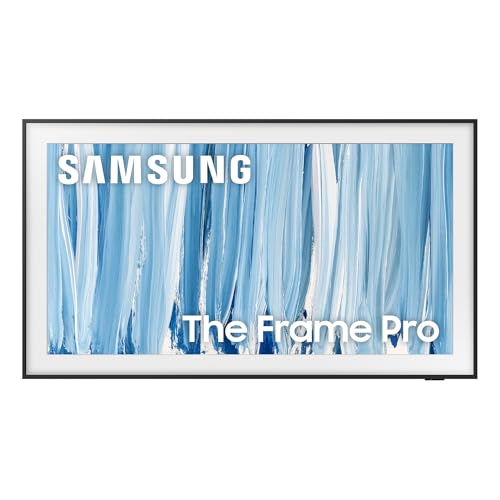 Samsung The Frame Pro 55-Inch LS03HW | Check price on Amazon | |
 Hisense CanvasTV 55-Inch S7N | Check price on Amazon | |
 TCL NXTVISION 65-Inch A300W | Check price on Amazon |
Key takeaways
- Discover the best TVs for glare reduction, from matte art TVs to OLED glare-free panels, and pick a bright-room screen that stays clear in strong daylight.
A bright living room should be a pleasure, not a problem. Yet for many households, the moment the afternoon sun comes through the window, the television turns into a mirror. Lamps, patio doors, and skylights leave bright smudges across the picture, washing out dark scenes and forcing viewers to close the curtains. The best TVs for glare reduction solve this at the panel itself, using matte finishes and anti-glare coatings that scatter incoming light instead of bouncing it back at the viewer.
This guide compares five televisions built around that idea. Three are art-style sets with matte screens designed to look like framed prints when idle, one is a flagship OLED with a dedicated glare-free coating, and one is a value-led art TV that brings the same matte treatment to a more modest budget. Every model below is a television with a stated anti-glare or glare-free screen feature, and each one is listed on Amazon US.
At a Glance
| Product | Best for | Key spec |
|---|---|---|
| Samsung S95D 77-Inch OLED | Premium picture with almost no glare | OLED Glare Free, 144Hz, 4K |
| Samsung The Frame 75-Inch LS03D | Large art TV for bright living rooms | Matte anti-reflection display, 4K QLED |
| Samsung The Frame Pro 55-Inch LS03HW | Bright-room art TV with mini-LED punch | Neo QLED, Glare Free matte finish, 144Hz |
| Hisense CanvasTV 55-Inch S7N | Value art TV with frame included | Hi-Matte display, 144Hz, 4K QLED |
| TCL NXTVISION 65-Inch A300W | Big matte screen on a tighter budget | Ultra Matte anti-glare screen, 120Hz |
How to Choose a TV for Glare Reduction
Start with the screen finish, not the brand name. The single most important factor is how the panel handles incoming light. A matte or anti-reflective finish spreads light across a wide angle, so a window becomes a soft haze rather than a sharp reflection; a glossy panel acts like a dark mirror. Look for explicit wording in the specifications, such as matte display, anti-reflection, anti-glare, or glare-free.
Brightness matters as much as the coating. An anti-glare finish can only do so much if the panel itself is dim. In a sunlit room, a brighter screen holds contrast and colour against ambient light, while a dim one looks grey and washed out even with a good coating. OLED sets such as the Samsung S95D pair their glare-free coating with strong HDR brightness, while mini-LED models such as The Frame Pro use a dense backlight to push highlights through daylight. HDR support and an ambient light sensor help too.
Panel type shapes the trade-off. OLED panels deliver deep blacks and wide viewing angles, suiting rooms where people sit off to the side, but the best OLED picture still depends on controlling direct sunlight. QLED and Neo QLED sets use a backlight, so they can sustain higher brightness in sunny rooms, at the cost of slightly less perfect blacks. Art-style QLED sets add a matte layer on top, which is why they dominate this category. Let viewing habits steer the choice: dark-room film nights favour OLED, while daytime viewing favours brighter QLED.
Size and placement change the glare equation. A larger screen catches more light simply because there is more surface to reflect, so placement matters. A set mounted opposite a window will always fight harder than one on a side wall. Before buying, note where the sun falls at the times the television is used most, and measure the viewing distance so the chosen size fits the room. Art TVs with slim flush mounts help here, because a screen close to the wall catches less angled light than one on a deep bracket.
Do not overlook viewing angle and extra features. In a bright room, viewers rarely sit dead centre, so a wide viewing angle keeps colours true from the sofa ends. Art modes, which display paintings or photographs when the set is idle, are a genuine bonus on matte screens, because the same finish that kills glare also makes still images look like real prints. High refresh rates and variable refresh rate support matter for gaming too.
Samsung S95D 77-Inch OLED
The Samsung S95D is the flagship option in this guide and the only OLED here, built for viewers who want reference-grade picture quality without surrendering the room to reflections. Its headline feature is OLED Glare Free, an anti-glare technology Samsung introduced with this model that limits light distraction on the screen. Samsung describes the result as nearly no glare, with clarity, colour, and contrast preserved even when light falls across the panel. At 77 inches, this is a big-screen set for a main living room, and the OLED panel supplies deep blacks and precise contrast that backlit sets cannot quite match.
Under the glass, the S95D runs on Samsung’s NQ4 AI Gen2 Processor, which upscales lower-resolution content toward 4K and manages colour and detail scene by scene. OLED HDR Pro handles high dynamic range content, and HDR10+ support covers a wide library of streaming films and shows. Motion Xcelerator at 144Hz keeps fast action smooth, which suits sports and gaming as well as films. Sound is handled by Dolby Atmos with Object Tracking Sound+, so audio follows movement on screen, and Alexa is built in for voice control alongside Samsung’s Tizen smart platform.
As with any flagship OLED, the 77-inch panel needs a wide wall and a sturdy mount, and it sits in the highest budget tier of this guide. Direct, harsh sunlight will still challenge any television, matte coating or not, so placement away from the worst of the afternoon sun remains wise.
Pros:
– Dedicated OLED Glare Free anti-glare coating
– Superb OLED contrast with deep blacks
– 144Hz refresh rate for sports and gaming
– Strong HDR performance with OLED HDR Pro
– Dolby Atmos sound with Object Tracking Sound+
Cons:
– Premium tier pricing
– Very large 77-inch panel needs ample wall space
– Direct sunlight can still overwhelm any screen
Samsung The Frame 75-Inch LS03D
The Frame is the television that made matte screens famous, and the 75-inch LS03D is the large-room version of the 2024 model. Its anti-reflection matte display is certified glare-free in Samsung’s own description, scattering light so the screen reads like a printed picture rather than a glowing rectangle. That finish is the point of the set: in Art Mode, it displays paintings and photographs from Samsung’s Art Store, and the matte surface gives them the texture of real canvas.
As a television, the LS03D is a 4K QLED set with Quantum HDR, 100 percent Colour Volume with Quantum Dot, and a Quantum Processor 4K that upscales content. The Real Depth Enhancer adds dimensionality to the picture, and the panel runs at a 120Hz refresh rate, which keeps motion smooth for films and casual gaming. Dolby Atmos audio and Alexa built-in round out the feature list. The Slim Fit Wall Mount is included, so the set hangs almost flush to the wall like a real frame, and magnetic bezels in assorted finishes can be swapped to match the room. At 12.4 x 66.2 x 39.3 inches and 79.1 pounds, it needs a solid wall fixing.
The main limitation is brightness and contrast. The Frame is an edge-lit QLED set without the local dimming of a mini-LED model, so it cannot match the S95D or The Frame Pro for HDR punch in a very bright room or a dark home cinema. The Art Store subscription is also a paid extra for the full curated collection, although uploading personal photos is free.
Pros:
– Certified glare-free matte display
– Art Mode makes the screen look like framed art
– Slim Fit Wall Mount included for a flush hang
– Customizable magnetic bezels
– Large 75-inch screen suits open living rooms
Cons:
– No local dimming, so HDR contrast is modest
– Art Store subscription costs extra for the full library
– Heavy at 79.1 pounds, so wall fixing must be secure
Samsung The Frame Pro 55-Inch LS03HW
The Frame Pro is Samsung’s answer to the one weakness of the original Frame: brightness. This 2026 model, the 55-inch LS03HW, keeps the matte Glare Free finish and Art Mode of the standard Frame but upgrades the panel to Neo QLED with a mini-LED backlight using Quantum Matrix Technology Slim. The result is a brighter, higher-contrast picture that holds up better in sunlit rooms. It is the pick for buyers who love the art-TV idea but want more punch from HDR films and daytime sport.
The specifications underline the step up. The 55-inch panel runs at 4K resolution, 3840 x 2160, with a native 144Hz refresh rate and variable refresh rate support, plus a 240Hz DLG mode for PC gaming. Samsung’s Vision AI smart platform handles upscaling and picture optimisation. A Wireless One Connect box moves connections away from the screen, so only a single slim cable runs to the wall-mounted panel, and the Slim Fit Wall Mount is included. At about 48.7 inches wide, roughly 1 inch deep, and 33.1 pounds without its stand, it hangs flush easily. Alexa is built in, and Art Mode carries the same curated artwork library as the standard Frame.
Two caveats: the 55-inch size suits bedrooms, studies, and smaller living rooms rather than a large open-plan space, and larger sizes cost considerably more. Second, as a 2026 model, the Frame Pro has a shorter track record than the long-running LS03D, so long-term reliability data is thinner.
Pros:
– Mini-LED Neo QLED backlight for brighter HDR
– Glare Free matte finish with Art Mode
– 144Hz native refresh rate with VRR
– Wireless One Connect box for a clean install
– Slim, light panel that hangs almost flush
Cons:
– 55-inch size suits smaller rooms best
– Shorter track record as a 2026 model
– Customizable bezels are sold separately
Hisense CanvasTV 55-Inch S7N
The Hisense CanvasTV S7N is the value pick among the art TVs in this guide, bringing a genuine anti-glare matte screen to a more accessible budget. Its Hi-Matte Display uses a low-reflection coating that Hisense describes as delivering a clear picture with no glare whatever the ambient lighting, and Art Mode turns the idle screen into a gallery display. The frame and UltraSlim Wall Mount are included, so the set hangs flush like a picture straight away, with a teak-effect frame supplied as standard.
The panel itself is a 55-inch 4K QLED screen with Quantum Dot colour, Dolby Vision HDR, and a 144Hz Game Mode Pro that suits console gaming. Google TV is the smart platform, giving access to the major streaming apps with voice search. The listed dimensions are 1.4 x 48.5 x 28 inches, and the set weighs 40.3 pounds, which makes it manageable for a standard wall mount.
The compromises are modest and predictable at this tier. The CanvasTV cannot match the brightness or processing refinement of Samsung’s Neo QLED flagship, and its art library, while free, is smaller than Samsung’s curated store. The 55-inch size is also the sweet spot for this model, so buyers wanting a very large matte screen should look at the 65-inch version of the same series or the 75-inch Frame instead.
Pros:
– Hi-Matte anti-glare display at a value tier
– Frame and UltraSlim Wall Mount included
– 144Hz Game Mode Pro for console gaming
– Dolby Vision HDR and Google TV
– Free art library in Art Mode
Cons:
– Less bright than premium Neo QLED rivals
– Smaller art library than Samsung’s store
– 55-inch size may feel small in a large room
TCL NXTVISION 65-Inch A300W
The TCL NXTVISION A300W is the largest screen in this guide relative to its budget tier, a 65-inch art TV with an Ultra Matte anti-glare screen. TCL describes the finish as a highly matte anti-reflective surface that gives a true wall-art look, and the effect in a bright room is the same as on the more expensive art TVs: windows and lamps dissolve into a soft wash instead of a hard reflection. Only 1.1 inches deep with no external connection box, it ships with a light wood magnetic frame and a flush wall mount in the box.
Picture quality comes from a 4K QLED panel with HDR Ultra, Dolby Atmos audio, and a 120Hz native refresh rate with 144Hz variable refresh rate support for gaming. The AiPQ Pro Processor optimises colour, contrast, and clarity scene by scene, and Google TV provides the smart platform with voice control through Alexa and Google Assistant. TCL’s Art Library holds hundreds of curated artworks, and an AI art feature can generate images to display, alongside a personal photo gallery mode.
The trade-offs sit in refinement rather than in the glare handling itself. The edge-lit backlight and mid-range processing cannot match the contrast of a mini-LED or OLED set, so very dark film scenes in a darkened room will look greyer than on the S95D. The art library is also smaller than Samsung’s.
Pros:
– Large 65-inch Ultra Matte anti-glare screen
– Very slim 1.1-inch all-in-one design
– Light wood frame and flush mount included
– 120Hz panel with 144Hz VRR for gaming
– Google TV with a large app selection
Cons:
– Edge-lit backlight limits HDR contrast
– Smaller art library than Samsung’s store
– Dark-room black levels trail OLED rivals
Which One Fits Your Room
Choose by room first and by budget second. For a large, sunny living room where picture quality is the priority, the Samsung S95D is the strongest performer, pairing OLED contrast with a dedicated glare-free coating. If the room is equally a living space and a gallery, The Frame 75-inch LS03D gives the biggest matte canvas, while The Frame Pro 55-inch is the better pick for a smaller room where HDR brightness matters more than size.
For tighter budgets, the choice is between the Hisense CanvasTV and the TCL NXTVISION. The Hisense wins for bedrooms and apartments, where its bundled frame and mount, 55-inch size, and gaming features fit neatly. The TCL wins where size matters most, putting a 65-inch matte screen on the wall for the least outlay. Mount whichever model is chosen on a side wall rather than directly opposite the brightest window, and the anti-glare finish will do the rest.
Frequently Asked Questions
Do matte screens make the picture look dull?
A matte finish scatters a small amount of light, which can soften the very deepest blacks compared with a glossy panel in a dark room. In a bright room, the trade is worth it, because a glossy screen loses far more contrast to reflections than a matte screen loses to diffusion.
Is an anti-glare TV enough on its own, or do I still need curtains?
An anti-glare screen handles lamps and indirect daylight very well, and it copes with soft window light far better than a glossy panel. Direct sun will still wash out any television, so sheer curtains or moving the set away from the worst sun remain useful. The coating removes the need to black out the room, but it is not a substitute for all light control.
What is the difference between matte, anti-glare, and glare-free?
The terms overlap and brands use them loosely. Matte describes the finish, anti-glare describes the effect of scattering reflections, and glare-free is Samsung’s brand name for its matte treatment on the S95D and The Frame Pro. All three point to the same idea: a screen that diffuses incoming light instead of reflecting it cleanly.
Can I add an anti-glare film to a normal TV instead?
Aftermarket films exist and can reduce reflections on a glossy set, but they are a compromise. A film can soften the image, trap dust or bubbles during fitting, and may not match the optical quality of a factory matte panel. A film suits a set already owned; a factory matte screen is better when buying new.
Which size is best for a bright room?
Size should follow viewing distance, not brightness: sit roughly one and a half to two and a half times the screen diagonal away from the set. A larger screen does catch more light, so in a very sunny room, a slightly smaller matte set on a side wall often looks better than a huge glossy set opposite a window.
Do art TVs need a subscription to show artwork?
Samsung’s Art Store charges for full access, although uploading personal photos is free. Hisense and TCL include free art libraries with smaller catalogues.
Conclusion
Glare is solvable when the screen itself is chosen for a bright room. The Samsung S95D leads on outright picture quality with its OLED Glare Free coating, The Frame and The Frame Pro lead on the art-TV look with matte finishes that turn the screen into a framed print, and the Hisense CanvasTV and TCL NXTVISION bring the same idea to more modest budgets. Match the size to the room, favour a matte or glare-free finish, and check HDR brightness before deciding. Any of the five sets in this guide will keep the picture visible when the sun comes out, which is exactly what a bright-room television should do.
Disclosure: As an Amazon Associate, we earn from qualifying purchases.