Our Short List of 3

- Best for: Xbox competitors who want a single low-latency wireless headset with a long stated battery life.
- Driver: 90mm planar magnetic
- Microphone: A.I. noise filtering microphones
- Connectivity: Bluetooth, low-latency wireless, wired
- Interfaces: 3.5mm audio, USB, USB Type C

- Best for: PlayStation-first players who want a retractable mic and a lossless console link.
- Driver: planar magnetic, size not stated in the listing
- Microphone: retractable boom with AI-enhanced noise rejection
- Connectivity: PlayStation Link wireless, Bluetooth, 3.5mm jack
- Battery average life: 30 hours

- Best for: PC desk players with a DAC or amp who prefer an open-back wired headset.
- Driver: ROG-tuned HIFIMAN planar magnetic, stated as 100mm in the listing copy
- Design: open-back, wired only
- Microphone: on-cable full band boom microphone
- Connections: 3.5mm, 6.35mm and 4.4mm plugs, USB-C to dual 3.5mm adaptor included
All 5 Picks at a Glance
| Product | Specs | Action |
|---|---|---|
| Audeze Maxwell Wireless Gaming Headset for Xbox |
| Check price on Amazon |
| PlayStation Pulse Elite Wireless Headset |
| Check price on Amazon |
| ASUS ROG Kithara Open-Back Wired Headphones |
| Check price on Amazon |
 HyperX Cloud Orbit S Gaming Headset |
| Check price on Amazon |
 Audeze Penrose Wireless Gaming Headset for PlayStation |
| Check price on Amazon |
Key takeaways
- Compare five planar magnetic gaming headsets for competitive multiplayer, covering drivers, microphones, wireless links and platform versions.
Planar magnetic gaming headsets promise faster, cleaner driver response than the dynamic drivers in most headsets, but the competitive buyer faces a narrow field and some awkward trade-offs. The leading models split by platform, with separate Xbox and PlayStation versions sold as different listings, and they split again by connection: low-latency wireless sets built for ranked play on one side, wired sets that give up mobility for a direct signal path on the other. Several designs are also older releases, so stock can be thin or used-only.
This roundup is for Xbox competitors who need a licensed wireless option, PlayStation players choosing between two planar designs, and PC players who prefer a wired open-back headset at a desk. Every pick below was chosen from the product names and specifications published on its Amazon page, and each entry states its driver, microphone and connection details exactly as the listing gives them.
Quick Picks
As an Amazon Associate we earn from qualifying purchases.
| Product | Best for | Key spec from title |
|---|---|---|
| Audeze Maxwell Wireless Gaming Headset for Xbox | Xbox players who want low-latency wireless and long battery life | Dolby Atmos with A.I. noise filtering microphones |
| PlayStation Pulse Elite Wireless Headset | PlayStation players who want a tidy first-party setup | Planar magnetic drivers with a retractable microphone |
| ASUS ROG Kithara Open-Back Wired Headphones | Desk players running a DAC or amplifier | ROG-tuned HIFIMAN planar magnetic drivers |
| HyperX Cloud Orbit S Gaming Headset | Wired players who want head tracking and 3D audio | Planar magnetic drivers with head tracking |
| Audeze Penrose Wireless Gaming Headset for PlayStation | PlayStation and PC players who want wireless plus Bluetooth | Low-latency wireless and Bluetooth in one headset |
How to Choose
Wireless Link or Wired Signal Path
Competitive play punishes audio delay, so start with the connection. A dedicated low-latency wireless link, like the 2.4GHz connections on the Audeze models or PlayStation Link on the Pulse Elite, keeps game sound and voice chat in step with the screen. Plain Bluetooth is fine for a phone or handheld on the side, but it is the weaker choice as your only ranked-play link. A wired headset removes latency and battery questions entirely, which is why the two wired picks suit fixed desk setups where the cable never leaves the station.
Platform Version and Compatibility
Planar magnetic gaming headsets are often sold in platform-specific versions, and the versions are separate products with separate listings. The Maxwell here is the Xbox version; a PlayStation version exists under a different ASIN, and the Penrose situation is the mirror image, with the PlayStation model listed here and an Xbox Penrose X elsewhere. Buying the wrong version can leave a console player with a wireless link their machine will not use. Check the platform named in the product title against your own setup before anything else, and treat PC and Switch support as a bonus rather than a reason to ignore the console split.
Microphone Design for Team Chat
Ranked teammates hear your microphone more than your drivers, so compare how each headset carries its mic. Detachable boom microphones, like those on the Maxwell, Orbit S and Penrose, give a clear voice position and come off for solo play. The Pulse Elite hides its mic in a retractable boom, while the Kithara puts a full band boom microphone on its cable. Also note the noise handling each listing claims, such as AI noise filtering or AI-enhanced noise rejection, since a busy room or mechanical keyboard can swamp an unfiltered mic.
Driver Size and Back Design
Every headset here uses planar magnetic drivers, but the listings do not present them identically. Audeze states 90mm drivers for the Maxwell and 100mm for the Penrose, HyperX states 100mm for the Orbit S, and Sony does not state a driver size for the Pulse Elite at all, so compare only what each page actually publishes. Back design matters just as much: the Kithara is the open-back outlier for quiet rooms and desk play, while the closed-back wireless models isolate crowd and household noise during matches.
The 5 Best Options
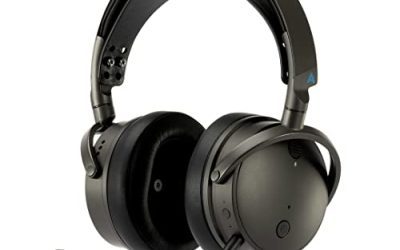
Audeze Maxwell Wireless Gaming Headset for Xbox
- Best for: Xbox competitors who want a single low-latency wireless headset with a long stated battery life.
- Driver: 90mm planar magnetic
- Microphone: A.I. noise filtering microphones
- Connectivity: Bluetooth, low-latency wireless, wired
- Interfaces: 3.5mm audio, USB, USB Type C
Xbox competitors who want a single low-latency wireless headset with a long stated battery life.
Availability signals for this listing conflict, so confirm a live buy option for the Xbox version before ordering.
The Maxwell is the Xbox-leaning pick for players who want one wireless headset to cover ranked sessions, party chat and long practice days without swapping gear. Its listing leads with 90mm planar magnetic drivers and AI noise filtering microphones, and the stated 80 hours of battery life suits players who charge weekly rather than nightly. With Bluetooth, low-latency wireless and wired connections all listed, it also covers PC, Mac and Switch duty away from the console. Confirm the Xbox version in the title matches your platform before ordering, since the PlayStation version is a separate listing.
PlayStation Pulse Elite Wireless Headset
- Best for: PlayStation-first players who want a retractable mic and a lossless console link.
- Driver: planar magnetic, size not stated in the listing
- Microphone: retractable boom with AI-enhanced noise rejection
- Connectivity: PlayStation Link wireless, Bluetooth, 3.5mm jack
- Battery average life: 30 hours
PlayStation-first players who want a retractable mic and a lossless console link.
The listing information for this headset rests on older page copies, so confirm a live buy option and that you are viewing the original version rather than the Midnight Black variant before ordering.
The Pulse Elite is the natural shortlist entry for PlayStation players who want planar magnetic sound without leaving the first-party ecosystem. Sony’s listing describes studio-inspired planar magnetic drivers with ultra-low distortion, a retractable boom microphone with AI-enhanced noise rejection, and the lossless PlayStation Link connection for fast, stable wireless play. A stated battery average life of 30 hours covers several evenings of ranked play between charges, and Bluetooth plus a 3.5mm jack keep it useful with phones and handhelds. It is the cleanest fit for PS5-first players who value a tidy, integrated setup.
ASUS ROG Kithara Open-Back Wired Headphones
- Best for: PC desk players with a DAC or amp who prefer an open-back wired headset.
- Driver: ROG-tuned HIFIMAN planar magnetic, stated as 100mm in the listing copy
- Design: open-back, wired only
- Microphone: on-cable full band boom microphone
- Connections: 3.5mm, 6.35mm and 4.4mm plugs, USB-C to dual 3.5mm adaptor included
PC desk players with a DAC or amp who prefer an open-back wired headset.
The listing conflicts on driver size, stating 100mm in its copy but 50mm in its own spec table, so treat the exact figure as unconfirmed before buying.
The Kithara is the desk player’s option, an open-back wired headset built around ROG-tuned HIFIMAN planar magnetic drivers for players who already run a DAC or amplifier. Because it is wired only, there is no battery to manage and no wireless link to drop mid-match, and the on-cable full band boom microphone keeps team chat on a boom rather than an inline pickup. The box contents include extra ear pads and a spread of plugs, from 3.5mm and 6.35mm single-ended to a 4.4mm balanced option, so it can land on most desk chains without adaptors bought separately.
HyperX Cloud Orbit S Gaming Headset
- Best for: Wired players who want head tracking and 3D audio for positional cues.
- Driver: 100mm planar magnetic, Audeze
- Audio: Waves Nx head tracking and 3D audio
- Microphone: detachable noise cancelling, with pop filter
- Connections: wired, USB-A, USB-C and 3.5mm detachable cables
Wired players who want head tracking and 3D audio for positional cues.
Stock signals for this model conflict and one retailer marks it discontinued, so confirm a live buy option before ordering.
The Cloud Orbit S suits competitive players who want spatial information to work harder, pairing 100mm Audeze planar magnetic drivers with Waves Nx head tracking and 3D audio. It is a wired headset, so it trades wireless freedom for a stable connection and a stated weight of 368g that stays manageable across long sessions. The detachable noise cancelling microphone ships with a pop filter, which helps keep plosives out of callouts, and the three detachable cable options cover USB-A, USB-C and 3.5mm connections across PC, console and mobile devices listed in its title.
Audeze Penrose Wireless Gaming Headset for PlayStation
- Best for: PlayStation and PC players who want low-latency wireless plus Bluetooth in one headset.
- Driver: 100mm planar magnetic
- Microphone: detachable boom microphone
- Connectivity: 2.4GHz low-latency wireless, Bluetooth 5.0, wired via included 3.5mm cable
- Platforms: PlayStation, Mac, PC, Switch
PlayStation and PC players who want low-latency wireless plus Bluetooth in one headset.
The only verified offer for this listing was a used, like-new unit, so confirm a live buy option and the condition on offer before ordering.
The Penrose is the PlayStation-side wireless alternative to the Maxwell, built on 100mm planar magnetic drivers with a low-latency 2.4GHz wireless connection and Bluetooth 5.0 for a second device. Its listing describes a detachable boom microphone for team chat and wired use through the included 3.5mm cable when the battery or the setting calls for it, and the stated platform support covers PlayStation, Mac, PC and Switch. For players who split time between a console and a computer, that dual wireless arrangement is the draw, provided a new unit can actually be found.
Which One Fits Your Situation
Ranked Nights on Xbox
The Maxwell is the one to shortlist. Its listing combines 90mm planar magnetic drivers, a low-latency wireless link and AI noise filtering microphones, and the stated 80-hour battery life means charging rarely interrupts a scrim schedule. Check the title names your console version, because the PlayStation Maxwell is a different listing entirely.
A PlayStation-First Setup
Two picks fit, and the choice is about tidiness. The Pulse Elite keeps everything first-party, with a retractable microphone and the PlayStation Link connection, while the Penrose adds Bluetooth 5.0 and a detachable boom for players who also game on PC. Penrose stock is the catch, so the Pulse Elite is the safer first look.
A Fixed PC Desk With a DAC
The Kithara was made for this corner of the room. It is wired and open-back, with plugs for 3.5mm, 6.35mm and 4.4mm connections and a USB-C adaptor in the box, so it drops into an existing DAC or amp chain without new hardware. The open-back design suits a quiet room rather than a shared one.
Chasing Positional Audio on a Wire
The Orbit S is the pick when head tracking matters more than freedom of movement. Its Waves Nx tracking and 3D audio are built to sharpen positional cues, the 100mm drivers are the largest stated here alongside the Penrose, and the wired connection keeps the signal stable. Confirm a live listing first, since its stock signals conflict.
Common Mistakes
- Buying the wrong platform version: the Xbox and PlayStation versions of the Maxwell and Penrose are separate listings with separate ASINs, and the wireless link follows the version named in the title.
- Assuming every planar magnetic headset states a driver size: the Pulse Elite listing never gives one, so do not fill the gap with figures from other models or editions.
- Treating Bluetooth as a competitive-grade link: on these headsets it is the secondary connection, while the low-latency wireless modes are the ones listings position for play.
- Trusting every spec-table field at face value: the Kithara listing contradicts itself on driver size and carries fields that do not fit a wired headset, so cross-check the copy before relying on a number.
- Skipping the availability check on older models: the Penrose was verified only as a used offer and the Orbit S shows conflicting stock signals, so confirm a live buy option first.
Frequently Asked Questions
Are planar magnetic drivers better for competitive multiplayer?
They can help, mainly through the fast, controlled response planar magnetic drivers are known for, which keeps footsteps and callouts distinct in busy mixes. The listings here state driver sizes from 90mm to 100mm where a size is given at all. Connection quality, microphone clarity and fit still matter as much as the driver type itself.
Can I use the Xbox version of a headset on PlayStation?
Generally no for the wireless features that matter. The Maxwell and Penrose are each sold in platform-specific versions under separate listings, and the console wireless link is tied to the version named in the title. A wired 3.5mm connection may still work for basic audio, but check the platform named on the listing against your console before buying.
Is Bluetooth good enough for ranked play?
Bluetooth is the weakest link in these listings for ranked play. The wireless picks here lead with dedicated low-latency connections, such as 2.4GHz wireless or PlayStation Link, and treat Bluetooth as the secondary option for phones and handhelds. If your platform supports the low-latency link, use it for matches and keep Bluetooth for casual listening.
Why do some of these listings need an availability check?
Several planar magnetic gaming headsets are older designs, and their Amazon listings no longer show steady new stock. In this roundup the Penrose was verified only as a used offer, the Orbit S shows conflicting stock signals, and the Maxwell has conflicting availability too. Confirming a live buy option first avoids paying attention to a listing you cannot actually order.